

Getting a tooth pulled is never a pleasant experience. You might be sitting at home right now with a numb mouth and a strong craving for your favorite morning brew. If you are wondering, “can i drink coffee after tooth extraction,” the short and honest answer is no; you should wait at least 24 to 48 hours.
Waiting to enjoy your morning cup can feel incredibly frustrating.
But rushing into it can seriously derail your recovery and cause severe pain.
Let’s look closely at why your body needs this break and how you can safely get your caffeine fix later.
Why Coffee and Fresh Extraction Sites Don’t Mix
To understand why coffee is risky, we have to look at what happens in your mouth right after surgery. When a dentist pulls a tooth, your body immediately goes to work to protect the empty space. It forms a small blood clot inside the open socket.
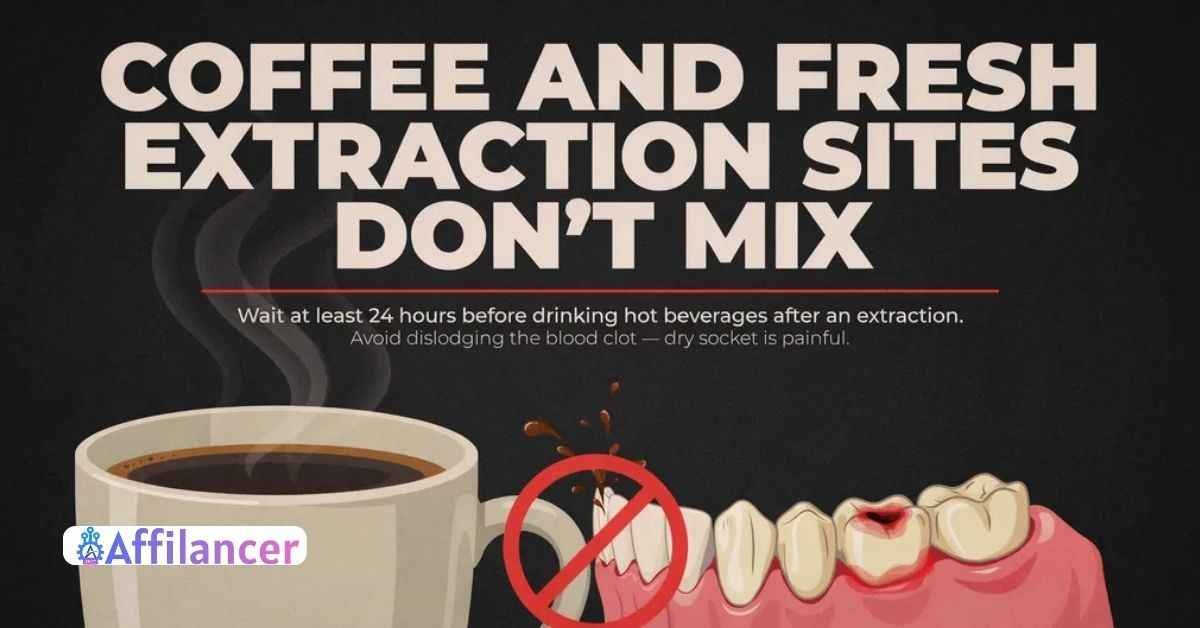
This blood clot acts like a natural bandage. It covers the exposed bone and the sensitive nerve endings beneath it.
If that clot gets damaged or washes away, you develop a highly painful condition called alveolar osteitis, which is commonly known as dry socket.
Hot liquids like freshly brewed coffee cause vasodilation, which means your blood vessels widen.
This extra blood flow can easily wash the protective clot away and start the bleeding all over again.
Furthermore, coffee is highly acidic.
Pouring an acidic liquid over raw, wounded gums will cause a sharp burning sensation and delay tissue healing.
Can I Drink Coffee After Tooth Extraction?
This is the exact question thousands of dental patients ask every single day. The safest approach is to wait a full 48 hours before consuming regular coffee. For a simple tooth extraction, 24 hours might be enough if your body heals quickly.
However, a complex or surgical extraction requires a much longer waiting period. If you had a tooth cut out rather than pulled, your gums need extra time to close properly. Drinking coffee too early forces your heart to pump blood faster due to the caffeine content.
That sudden spike in blood pressure can make the wound site throb and bleed.
Therefore, you must ask yourself if a single cup of coffee is worth restarting your entire recovery process.
Can I Drink Coffee After Wisdom Teeth Removal?
If you are asking, “can i drink coffee after wisdom teeth removal,” the rules are even stricter. Wisdom teeth are large and deeply rooted in your jawbone. Removing them leaves behind a much larger wound than a normal front tooth extraction.
Most oral surgeons recommend waiting at least 3 to 5 days before reintroducing coffee after a wisdom tooth surgery.
The lower jaw area is especially prone to dry socket because food and liquids naturally settle there.
Imagine a deep crater in the ground; it takes much more time and care to fill up safely than a small, shallow dent.
Your wisdom tooth sockets are exactly like those deep craters.
Hidden Traps Coffee Lovers Must Avoid
Even if you wait 48 hours, how you drink your coffee matters immensely. The biggest rule of oral surgery recovery is that you must never use a straw. Using a straw creates a strong vacuum suction inside your mouth.
This suction can instantly pop the blood clot right out of its socket like a cork from a bottle. Another hidden danger is adding milk, heavy creamer, or sugar to your drink. Dairy products and sugars leave a thin, sticky film inside your mouth.
This film becomes the perfect breeding ground for dangerous bacteria. If bacteria infect the open wound, you will face severe swelling and might need antibiotics.
Try to drink your coffee completely black and at a lukewarm temperature during the first few days.
How to Survive a Caffeine Withdrawal Headache Safely
We understand that giving up caffeine can cause a pounding headache and make you feel miserable. If you cannot function without it, there are a few safe adjustments you can make. You can drink a small cup of iced coffee or cold brew after the first 24 hours have passed.
The key is that the drink must be completely cold or room temperature. Remember to sip it gently directly from a wide-mouth glass without using a straw.
Alternatively, you can drink lukewarm, low-acid herbal teas like chamomile to soothe your mind. If you accidentally drink hot coffee too soon, do not panic. Immediately stop drinking it and rinse your mouth very gently with plain, room-temperature water.
Do not spit out the water forcefully; instead, let it drain out of your mouth naturally over the sink.
Signs of Complications: When to Call Your Dentist
It is essential to know the difference between normal healing pain and a serious issue. Normal soreness should gradually get better every single day. If you suddenly feel a sharp, throbbing pain on day three or four, your blood clot might be gone.
This radiating pain often travels up your jaw and straight into your ear. You might also notice a foul, metallic taste in your mouth or severe bad breath.
According to the American Association of Oral and Maxillofacial Surgeons, these are textbook signs of a dry socket.
If you experience a high fever, severe facial swelling, or active pus, you must call your dentist or oral surgeon immediately.
Can I drink iced coffee with a straw after my tooth extraction?
No, you must never use a straw because the vacuum suction will dislodge your healing blood clot.
How do I treat a caffeine headache if I cannot drink coffee?
You can take over-the-counter pain relievers like ibuprofen as recommended by your doctor, stay hydrated with plain water, or sip lukewarm decaf tea.
When can I start drinking hot coffee again?
You can safely return to hot coffee after 5 to 7 days, provided your bleeding has fully stopped and your pain has subsided.
Is black coffee better than coffee with milk after surgery?
Yes, black coffee is much safer because milk leaves a dairy residue that can promote bacterial growth in the wound.
What should I do if I accidentally drank hot coffee early?
Stop drinking it immediately, rinse your mouth gently with room-temperature water, and avoid touching the wound with your tongue.
Conclusion and Final Takeaways
Protecting your mouth after an extraction requires a little bit of patience. While skipping your hot morning brew is difficult, it prevents days of excruciating dry socket pain.
Stick to the recommended 24 to 48-hour timeline and always keep your drinks lukewarm or cold. Your mouth will heal much faster if you give it the peace and quiet it deserves.
When in doubt, always follow the specific post-operative instructions provided by your dental professional.