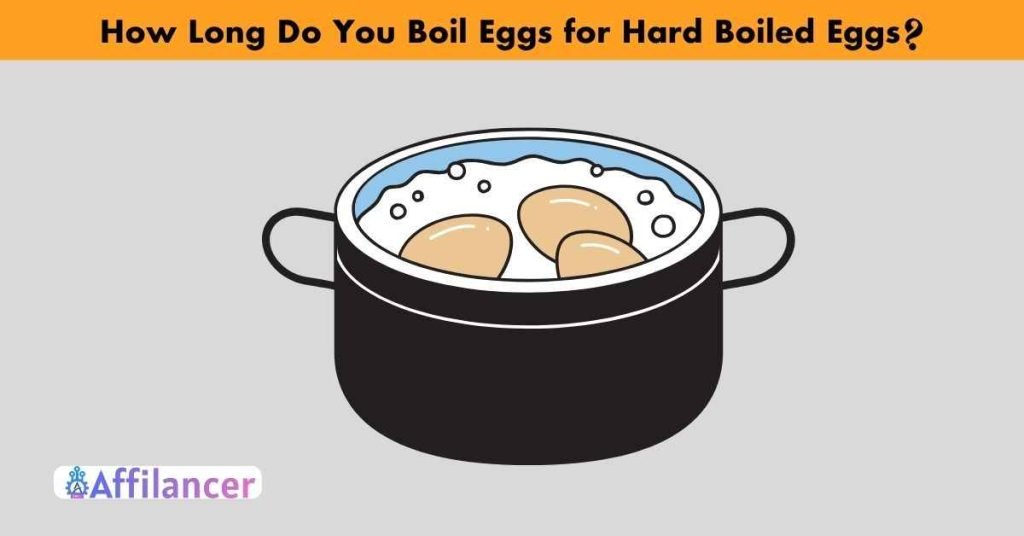
If you have ever wondered, “how long do you boil eggs for hard boiled eggs,” you know how easy it is to end up with a rubbery mess.
Boiling an egg seems incredibly simple until you try to peel it, only to find a chalky green yolk or a stubborn shell that clings to the egg white.
You probably know that you don’t need luck to boil eggs well. So what do you need to know? The answer is that you only need a basic understanding of kitchen science. You just need to know the right time to boil eggs. Don’t worry.
Here we will tell you everything. This guide will help you know the right time to boil eggs, the correct method and professional advice. This information will help you prepare breakfast with eggs perfectly every day.
How long to boil eggs for hard boiled eggs?
The ideal time to boil an egg depends entirely on your needs. The answer to this question depends on how hard you like your egg yolk. That’s why no one can give a straight answer.
Once you understand the requirements or needs of the job and master the right time to boil eggs, preparing meals with eggs will become easier for you. If you understand the estimate of how much you need to boil, you can be stress-free when it comes to boiling eggs.
Here is a reliable timeline for a standard large egg dropped directly into gently boiling water:
-
7 Minutes: The white is fully set, but the yolk is thick, rich, and jammy.
-
8 Minutes: The yolk is firm on the outer edges but remains soft and bright orange in the center.
-
9 Minutes: The sweet spot for a creamy, fully cooked yellow yolk without any dryness.
-
10 Minutes: A traditional hard-boiled texture—firm, pale yellow, and sturdy.
-
12 Minutes: A very solid yolk that is perfect for mashing into classic egg salads.
By tracking these exact minutes, you can easily customize your results regardless of your stove type.
The Boiling Eggs Time Chart: Yolk Profiles
| Cooking Time | Yolk Texture | Best Used For |
| 6 Minutes | Liquid and runny | Soft-boiled eggs for dipping toast soldiers |
| 7 Minutes | Sticky and jammy | Homemade ramen bowls and grain bowls |
| 9 Minutes | Creamy yet firm | Everyday high-protein snacking |
| 12 Minutes | Solid and pale | Deviled eggs and sandwich fillings |
How to Boil Eggs Perfectly in Hot Water:
The cooking methods of the old days are very different from the present. In the past, it was recommended to start boiling eggs by placing them in a pot of cold water.
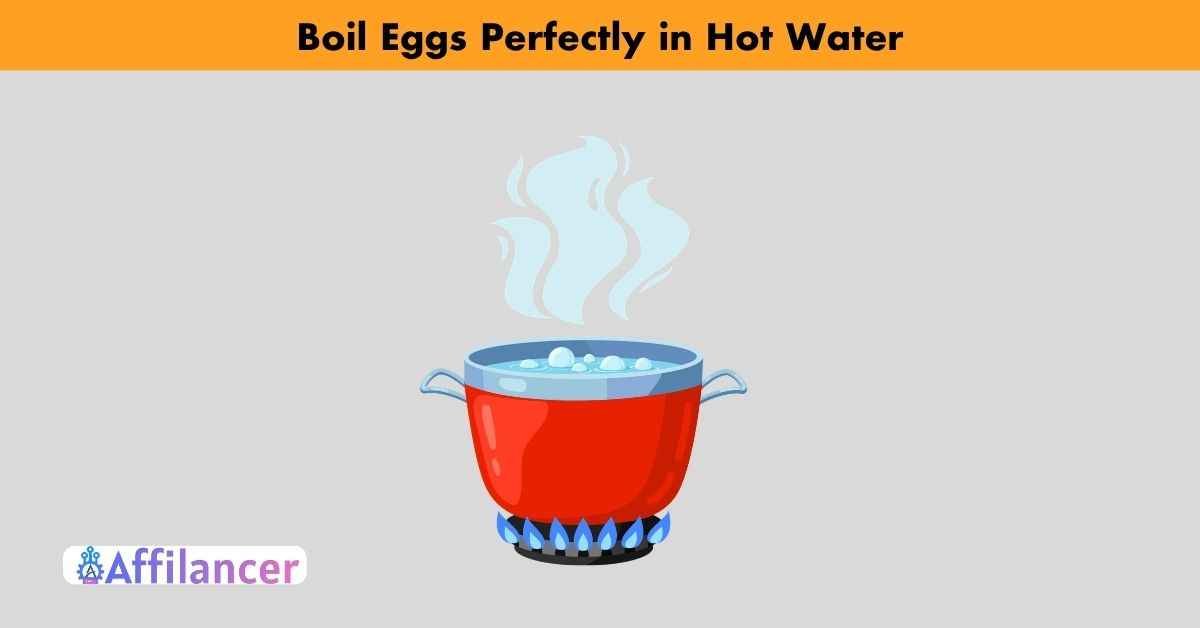
Now it is different, because it has been shown through extensive experiments in the kitchen that if eggs are boiled directly in boiling water instead of cold water, it becomes much easier to peel the eggshell.
When eggs are directly put in hot water, the sudden change in temperature of the egg causes the egg white proteins to stir. As a result, the egg proteins immediately coagulate. Following this technique prevents the egg whites from sticking to the inner shell like glue.
Step-by-step instructions for boiling eggs:
- Boil the water: Take enough water in a saucepan so that the eggs are submerged by at least an inch. Keep boiling the water. When the water starts to boil, move on to the next step.
- Reduce the heat slightly: Instead of leaving the eggs directly in the boiling water, set the burner to low heat. This is because if the water boils too much, the eggs will spill and burst. For this reason, you need to leave the eggs to boil with a little gentle heat.
- Carefully add the eggs: Take all the eggs that you will boil out of the refrigerator. Now, using a slotted spoon, lower the eggs one by one into the water.
- Turn on the timer: The timer is important for the eggs to be cooked to your liking. Set the kitchen timer according to how well you want them to be cooked.
Know why it is essential to immerse eggs in ice or cold water:
You may think that the egg is finished cooking as soon as you take it out of the pot.
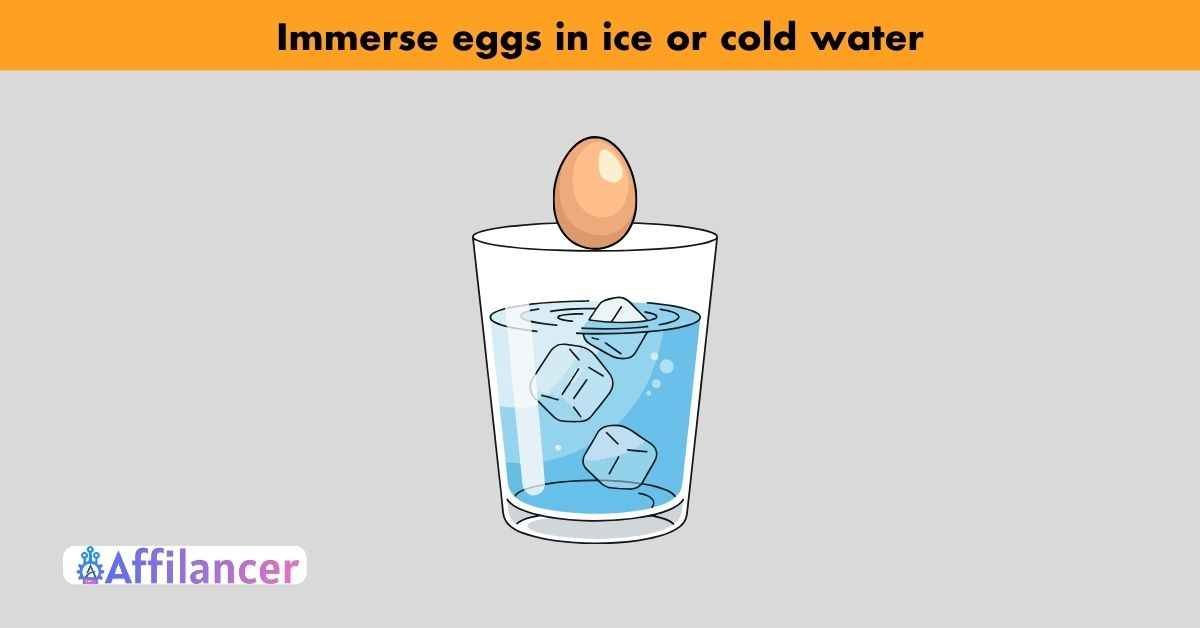
We should know that the residual heat trapped inside the shell continues to cook the yolk for a few more minutes. For this reason, the egg should be immersed in cold water as soon as it is taken out of the stove. Otherwise, the egg will be overcooked. It may even emit a strong sulfur-like odor. Therefore, the above rule should be followed.
We should also know that an awkward gray-green ring is formed around the yolk due to overcooking the egg. This ring is actually a harmless chemical reaction between the iron in the yolk and the sulfur in the egg white. This chemical reaction overcooks the egg. The awkward gray-green color means that the egg is overcooked.
To avoid this problem, keep a pot of cold water ready while boiling the egg. You can keep a large bowl of cold water or some ice cubes in it. Remove the eggs as soon as the timer goes off. Then immediately immerse them in ice-cold water, do not leave them at room temperature. It is recommended to immerse the eggs for at least 15 minutes. This rapid cooling causes the eggshell to shrink slightly. This shrinkage helps the egg to be removed easily and neatly.
Troubleshooting and Pro Tips for Success
Always Choose Older Eggs
Fresh eggs straight from a local farm have a lower, more acidic pH level, which makes the white adhere tightly to the shell. Eggs bought from the grocery store that have rested in your refrigerator for a week or two have a higher pH, making them much easier to clean.
Adjusting for Altitude and Size
If you live at a high altitude, lower atmospheric pressure causes water to boil at a lower temperature. You will need to add one to two minutes to your total cooking time to compensate.
Additionally, this guide assumes you are using standard “Large” eggs. If you are boiling medium eggs, subtract 30 seconds; if you are cooking extra-large or jumbo eggs, add a full minute to your timer.
Safe Food Storage Best Practices
According to food safety guidelines from the USDA, cooked eggs should never sit at room temperature for more than two hours. Keep your hard-boiled eggs unpeeled and store them in a sealed container in the fridge. Unpeeled eggs stay fresh and delicious for up to seven days, while fully peeled eggs should be consumed within two days for the best quality.